
Raffaello Galiotto rethinks natural stone design through digital technology
Raffaello Galiotto is an Italian designer whose practice explores materials, production processes and innovative approaches to design, with a particular focus on natural stone
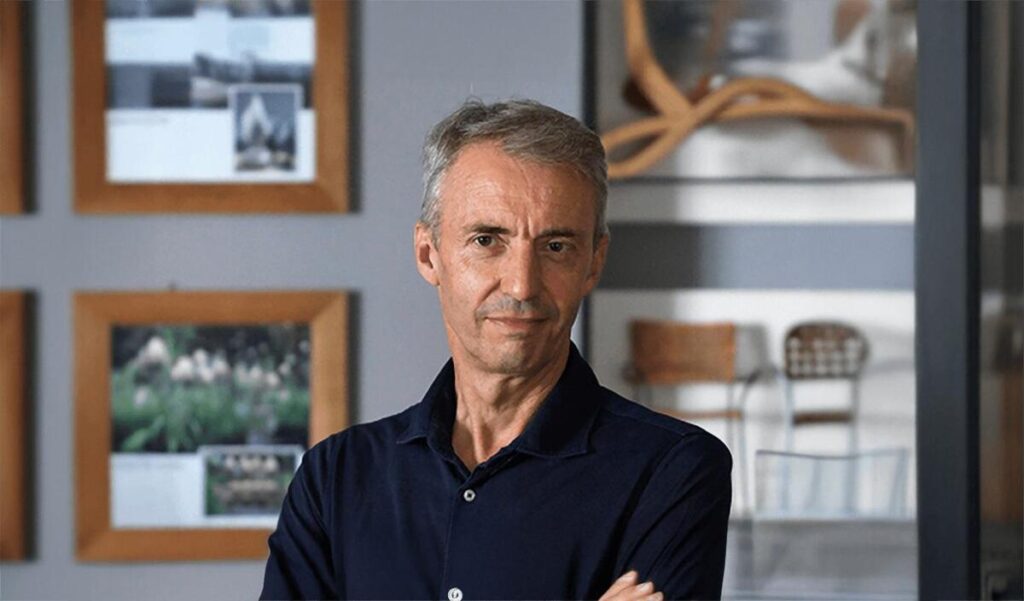
After studying Fine Art at the Academy of Venice, he turned his attention to the world of design and founded his own design studio in 1993.
With a keen interest in materials and technology, he has developed a deep understanding of production processes, characterising his projects with experimentation and original solutions, working with both man-made materials such as plastic and natural materials such as marble. He collaborates with many companies, creating numerous products, collections and experimental exhibitions, particularly in the stone sector, introducing innovations through the use of digital technology.
He is the curator of exhibitions at the experimental pavilion at Marmomac Verona. He has published books, participates in conferences and gives lectures on stone design. He was a lecturer in Design at the University of Ferrara from 2012 to 2019.
Separating and Reassembling Stone
The massive, compact nature of rock has always posed a challenge to humanity. The material’s solidity, tenacity, and promise of permanence have driven people to constantly seek new ways to extract and work it, creating objects and architectural structures built to endure.
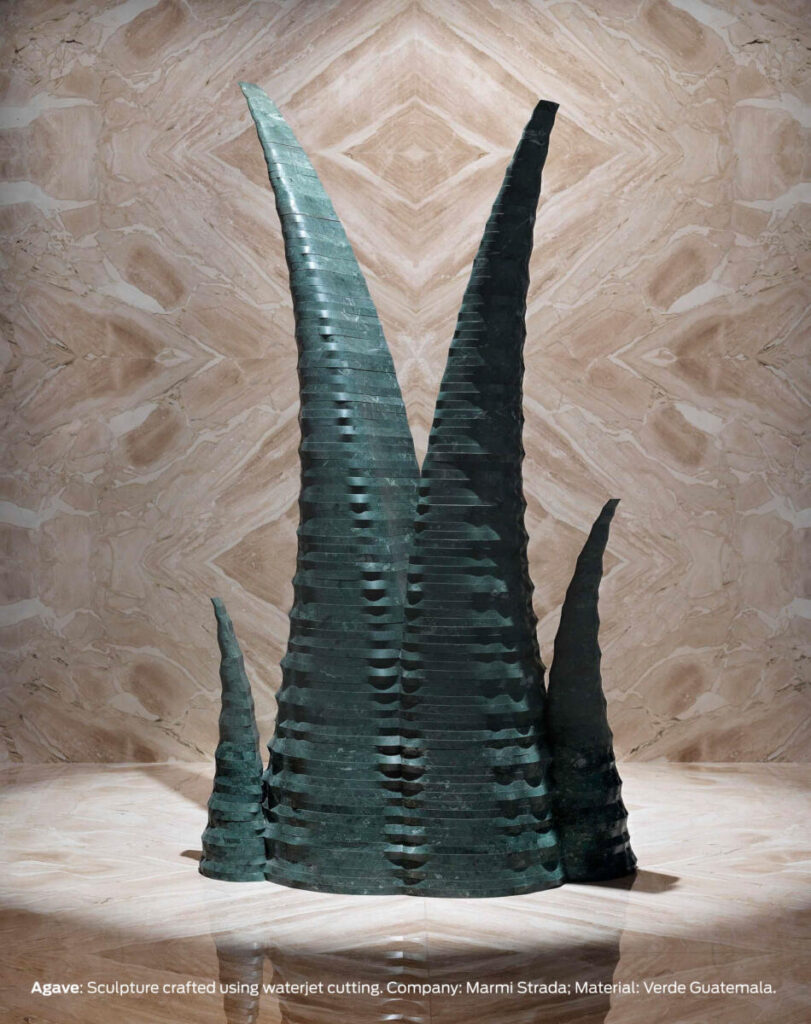
Throughout this evolution, however, two fundamental methods have remained constant: one that removes excess material to reveal a form, and another that separates the material through cutting.
The former is generally used for three-dimensional shaped pieces, while the latter—more efficient in terms of energy and material consumption—is used to produce flat surfaces such as slabs or tiles.
In his experimental work, particularly through the use of innovative digital technologies, hehas explored the potential for producing highly complex forms while drastically reducing waste. This approach offers clear production advantages, but for him it primarily represents an attitude of respect toward this non-renewable natural material.
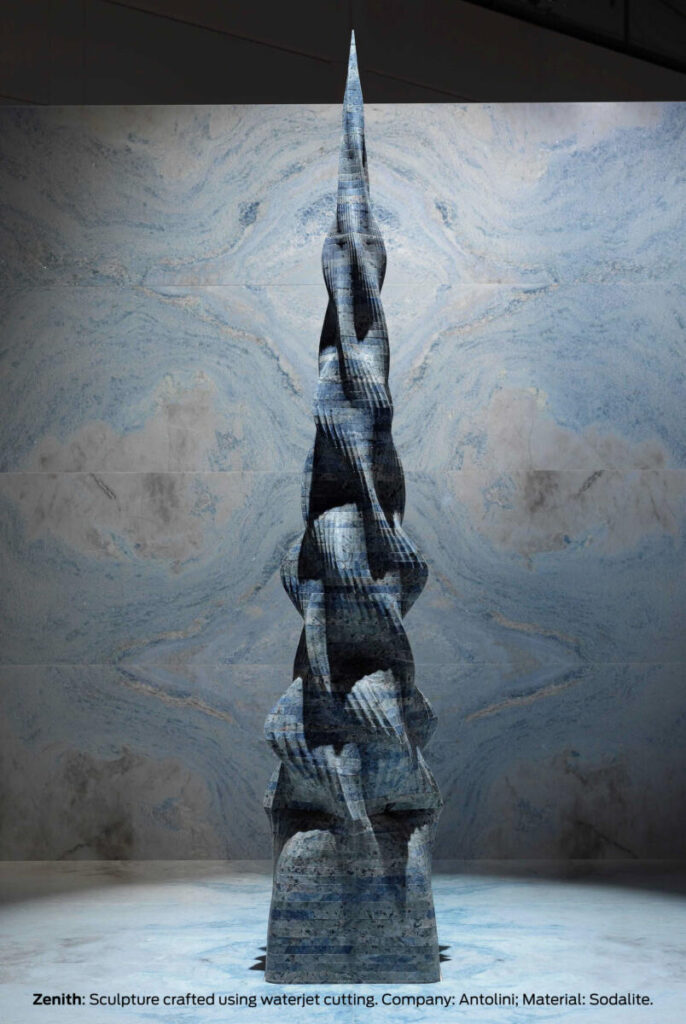
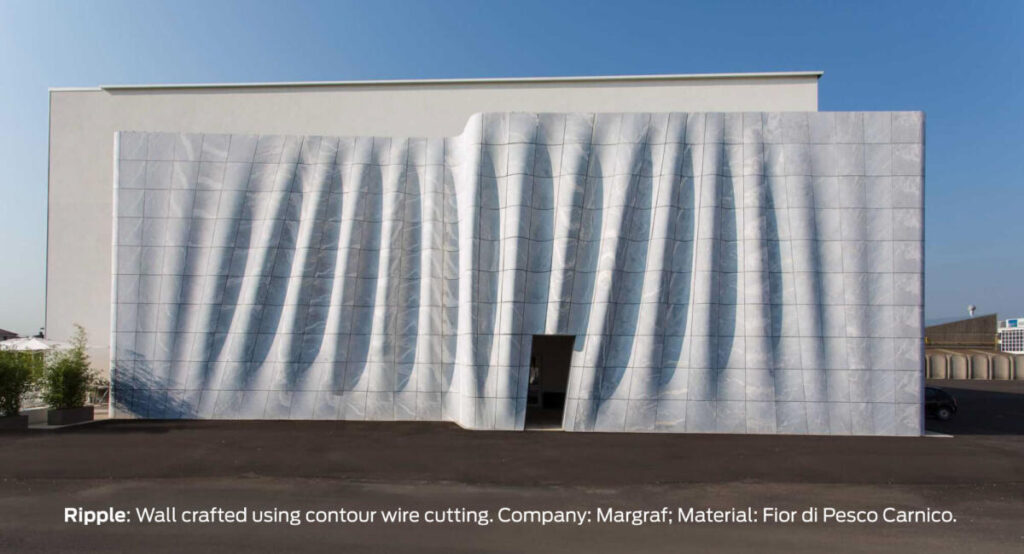
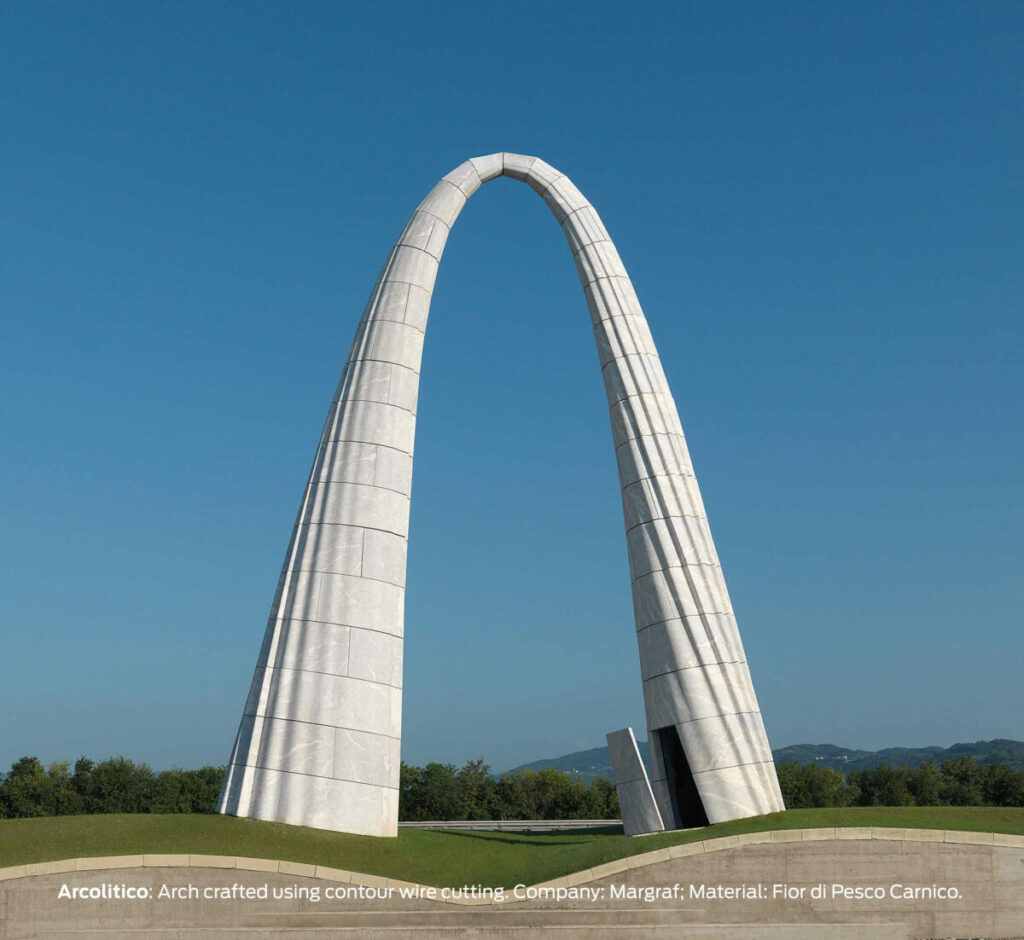
Contour wire cutting has enabled him to separate the material into shaped modular blocks and reassemble them to create continuous surfaces for architectural applications. Parametric software has proven invaluable here, supporting a design process capable of managing and visualizing highly complex composite elements. Optimized cutting allows for the separation of forms by simultaneously producing the inner face of one element and the outer face of another; these can then be reassembled to form a continuous surface.
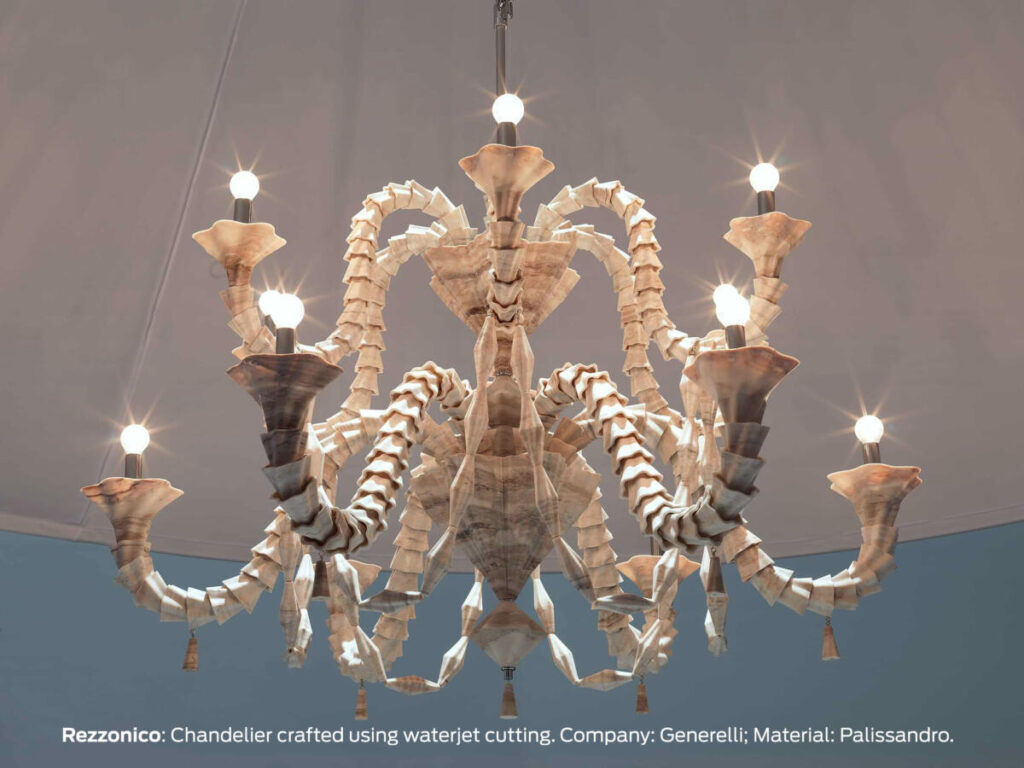
Another fascinating technology is waterjet cutting, which uses a thin stream of water—directed by a nozzle mounted on a five-axis controlled head—to cut the material. This method enables the creation of highly detailed objects and closed forms. Here too, careful design can involve layering alternating elements cut from different slabs and reassembling them to form a continuous whole.
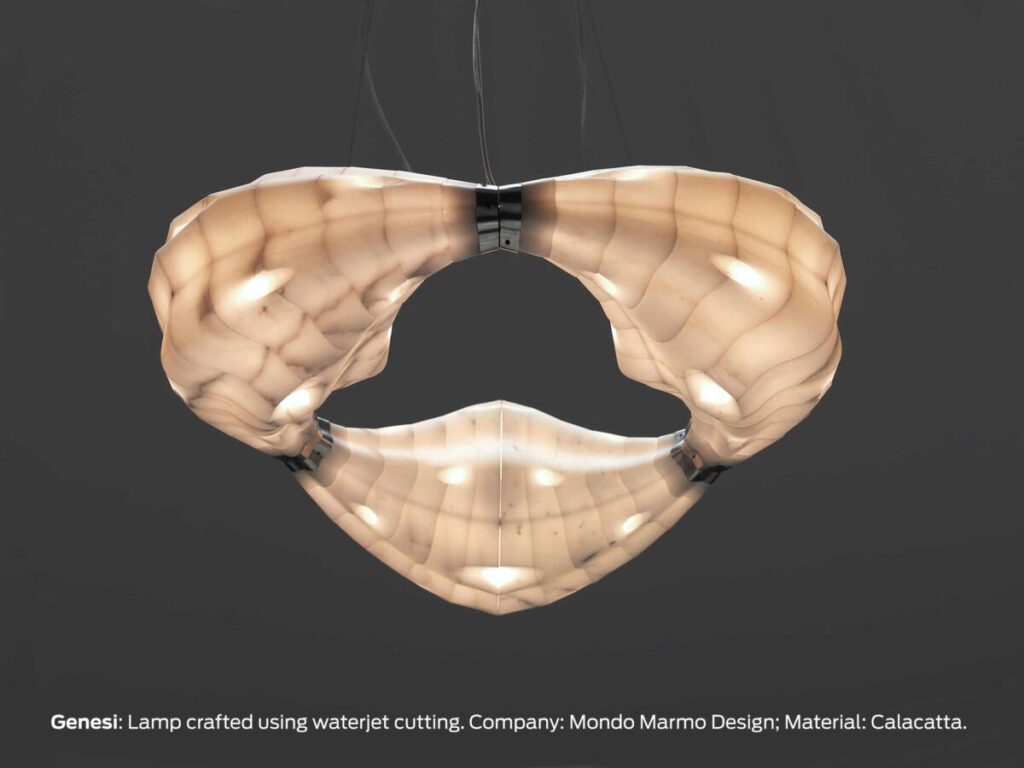
The accompanying photographs offer an initial demonstration of what can be achieved through careful design aided by new technologies, while treating this fascinating natural material with greater respect.


GIPHY App Key not set. Please check settings