

Suzhou Museum of contemporary art officially opens to the public
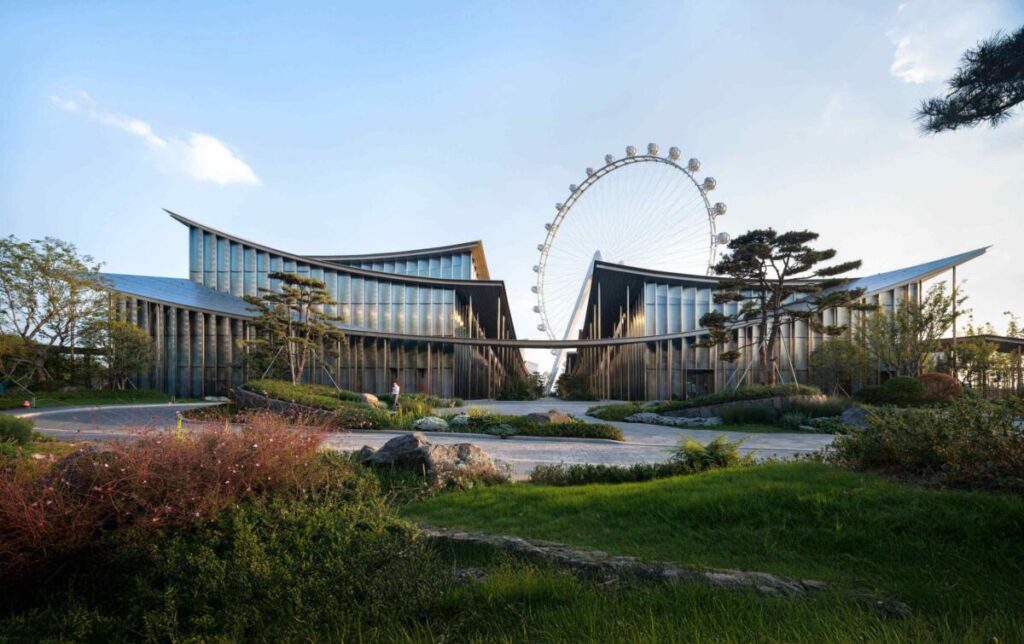
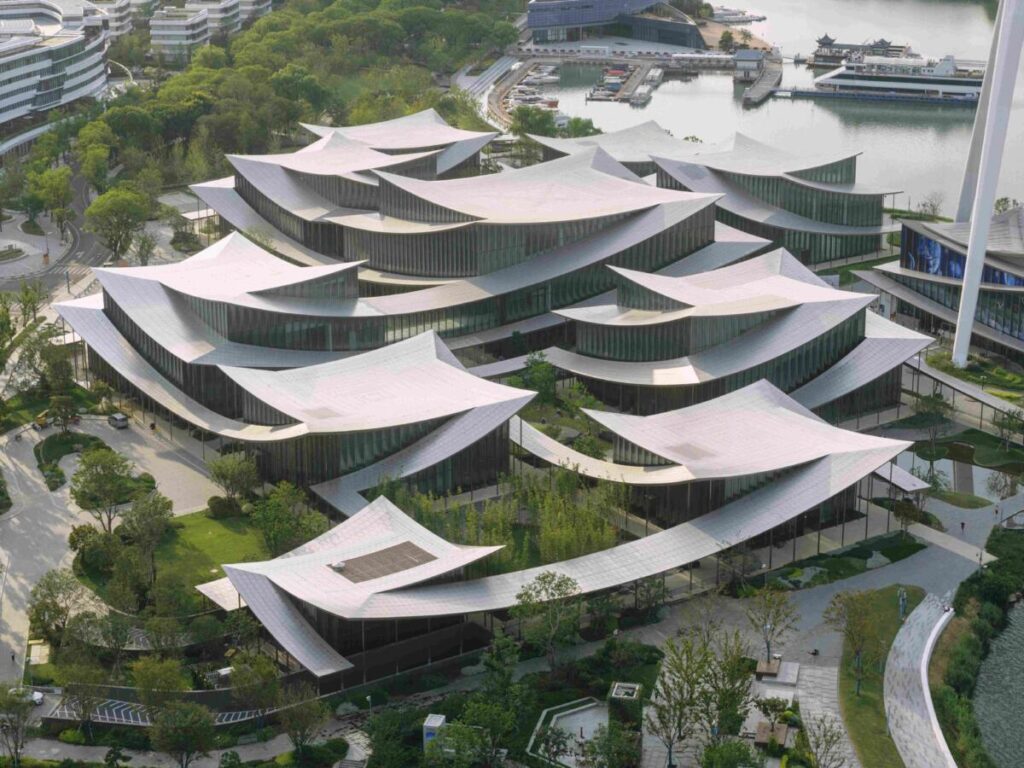
The 60,000 m² Suzhou Museum of Contemporary Art, designed by BIG – Bjarke Ingels Group, ARTS Group, VIA.inc and SHUISHI as a village of 12 pavilions beneath a continuous, ribbon-like roof, is now officially open to the public on the shores of Jinji Lake. Marking BIG’s first completed art museum, the project opens following a series of preview exhibitions as a new venue for contemporary art, design, and public life in Suzhou, with BIG’s Materialism exhibition remaining on view.
Rooted in the tradition of Suzhou’s gardens, the museum reimagines the lang 廊, the covered corridor that traces a path through a landscape, as a network of exhibition spaces. A continuous route threads through the museum’s pavilions, connecting galleries, gathering spaces, and cultural venues while allowing visitors to branch off along smaller paths between exhibitions. Linked by bridges and tunnels above and below ground, the museum offers a flexible sequence of spaces shaped by changing exhibitions and seasons.
“After many years of work and collaboration, it is a pleasure to finally welcome visitors to Suzhou Museum of Contemporary Art. We envision the museum as a place for discovery and exchange, where people can experience art in new ways and engage with ideas from across cultures and generations. Through its exhibitions and public programs, we hope to make the museum a lasting part of Suzhou’s cultural landscape and a destination for visitors from near and far.” – Wang Xiaosong, Executive Director, Suzhou MoCA.
“If the historic city center is the cradle of the Chinese garden, the lake district is the cradle of a new Suzhou. The site of the Suzhou Museum of Contemporary Art is sandwiched between the city and the lake. A newly constructed Ferris wheel partially blocks the relationship with the water. By dissolving the museum into a Chinese garden of interconnected galleries, distributed across the site like pavilions in a park, the museum becomes a connection between the city and the lake, rather than an obstacle. Its urban porosity allows citizens to walk through sculpture gardens to the lakefront, while the water penetrates between the pavilions to reach the city.” – Bjarke Ingels, Founder & Creative Director, BIG
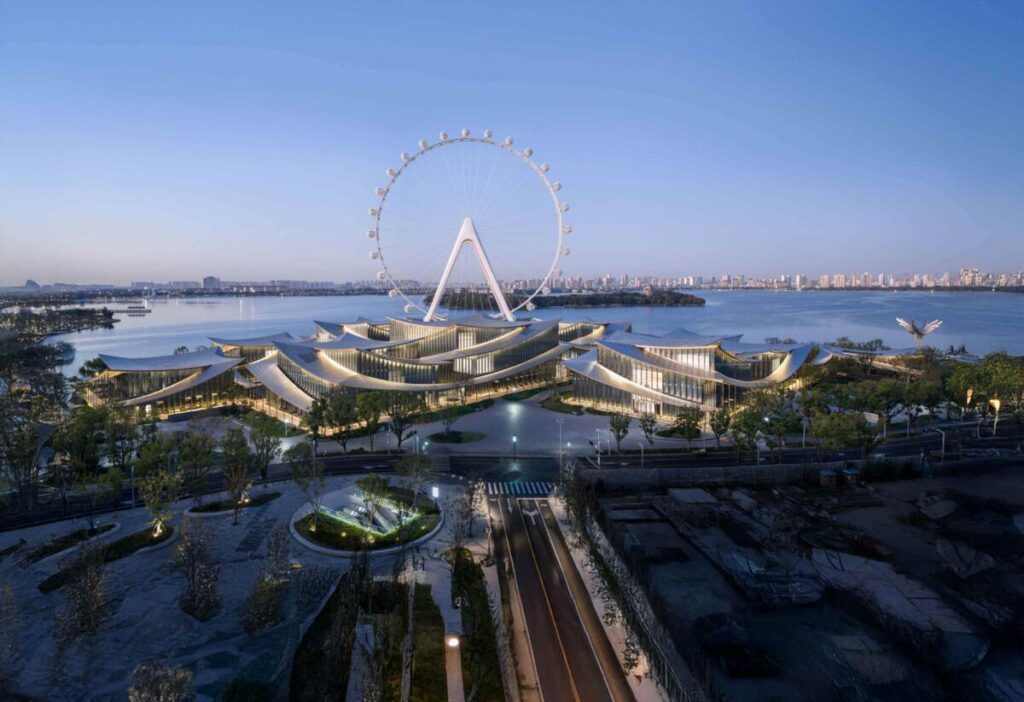
Bjarke Ingels continued: “From above, the museum appears like a traditional infinity knot as it intertwines the legs of the Ferris wheel to reach all the way into the lake. With the vast number of visitors ascending the wheel above, the roof surface de facto becomes the true fifth facade of the art complex. Not only do I see our design as an homage to its local heritage, a sort of Scandinavian reinterpretation of a unique typology, the Chinese garden, but the result is in many ways a manifestation of the ancient future of Suzhou and a testament to the construction quality and technical sophistication that is becoming the rule rather than the exception in contemporary Chinese architecture.”
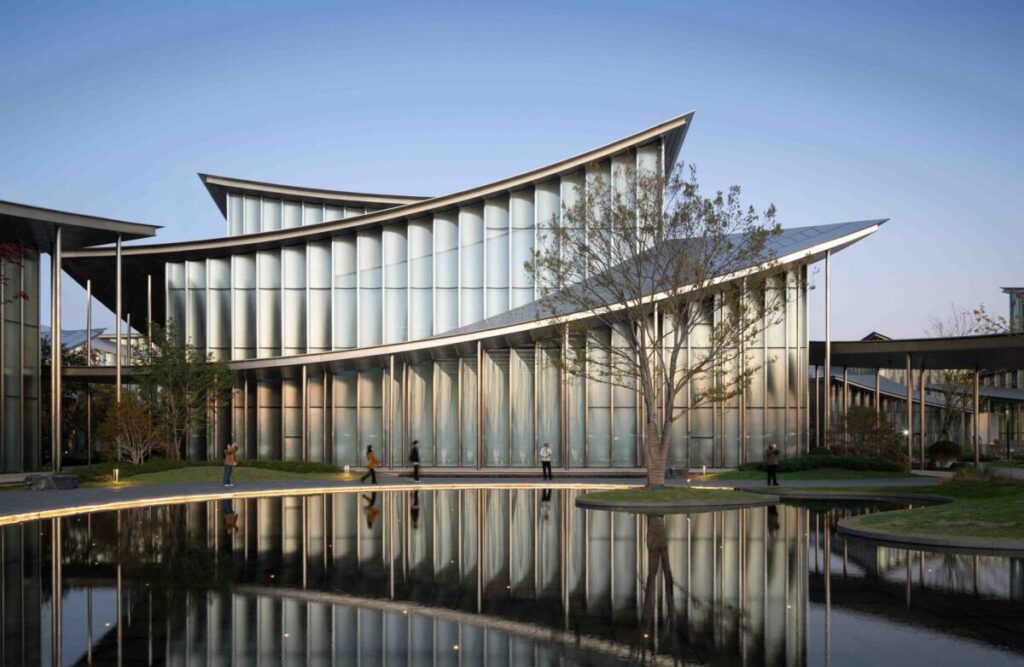
“The museum reconciles Western and Eastern spatial traditions through a deliberate duality. From the sky, the museum reads like traditional craftwork: a series of papercut knots framing the gardens below, turning the heritage of Suzhou into artwork. But as one descends and enters the museum, the clarity of the figure-ground dissolves. The gardens begin to flow into one another, unfolding as sequences of spaces, views, art, and nature – transforming a composition that appears precise from above into an experience of exploration and discovery on the ground.” – Catherine Huang, Partner, BIG
GIPHY App Key not set. Please check settings